Table Of Content
- Best AI Tool for Creating Urban Plans
- AI for volumetric design and planning
- How to Use Stable Diffusion to Create Awesome AI-Generated Art
- Does ArchiVinci preserve the design lines during rendering?
- Does the AI tool help with choosing plants for my landscape?
- LAF Fellowship Spotlight: Artificial Intelligence (AI) in Landscape Architecture
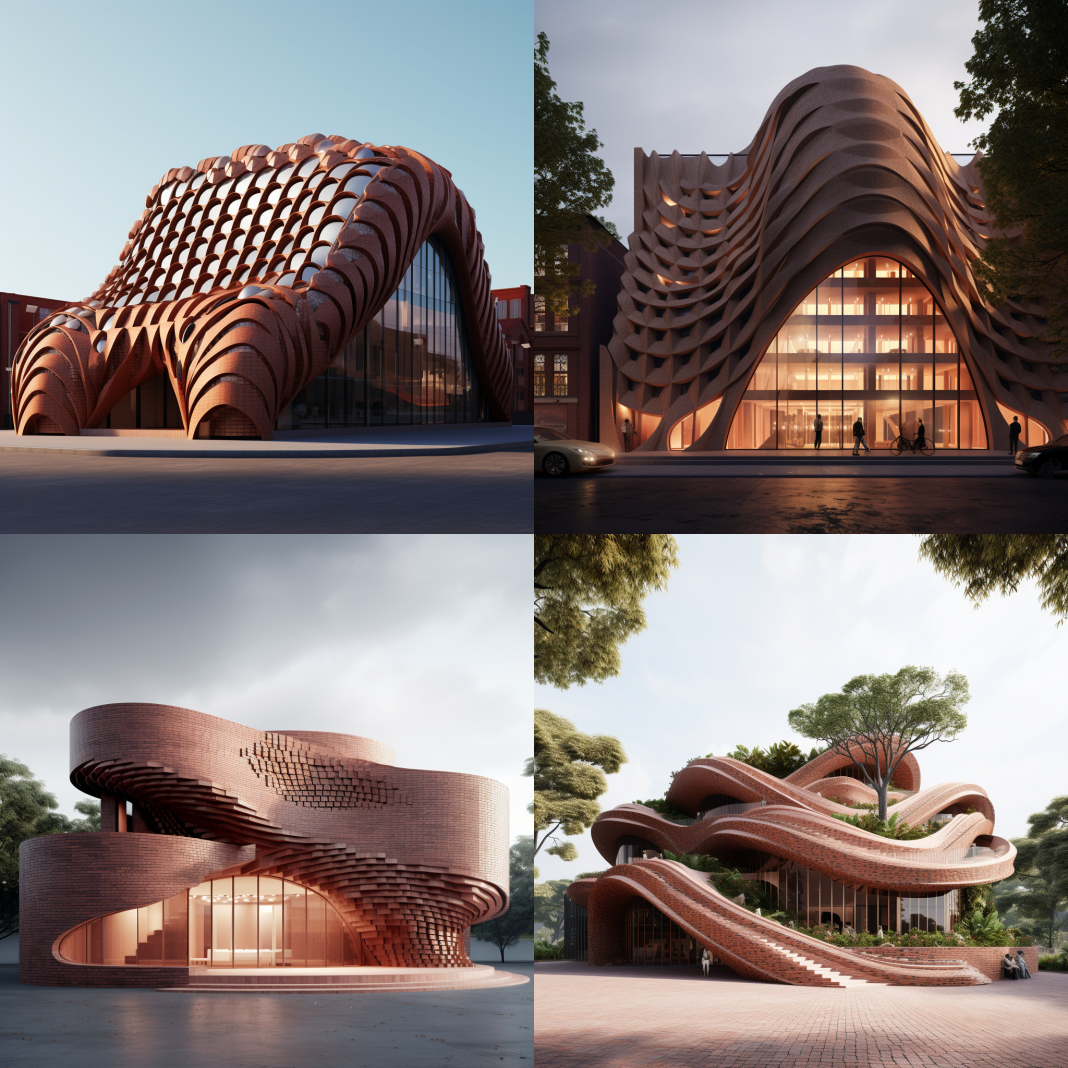
AI can’t yet define the constraints that come with a building project, such as the program, size, audience, material, or geographic context. These parameters come from interactions with clients, which also can’t be outsourced to AI. Th technology also has little understanding of how people move through space and interact with objects, and it can’t yet generate 3D imagery via text prompt with the richness and detail with which it creates 2D imagery. Feeding a string of architectural description (“Eco-topia Flintstones California Bungalow at the La Brea Tar Pits”) into image generators like MidJourney doesn’t result in anything buildable.
Best AI Tool for Creating Urban Plans
Second, it could imagine innovations in spatial design beyond the typical typologies by intersecting physical space with data-enabled ways of perceiving and understanding it. Third, it would be an office very much about making the future in tangible, physical, spatial detail, not merely visualizing possibilities digitally. It would understand the continuum between physical and digital experience as more fluid today than ever before, and that fluidity is a uniquely contemporary design opportunity. Fourth, it would embrace collaborations in many forms, engaging corporate, institutional, governmental, and cultural clients with equal relevance because it could speak the common data language of systemic challenges.
AI for volumetric design and planning
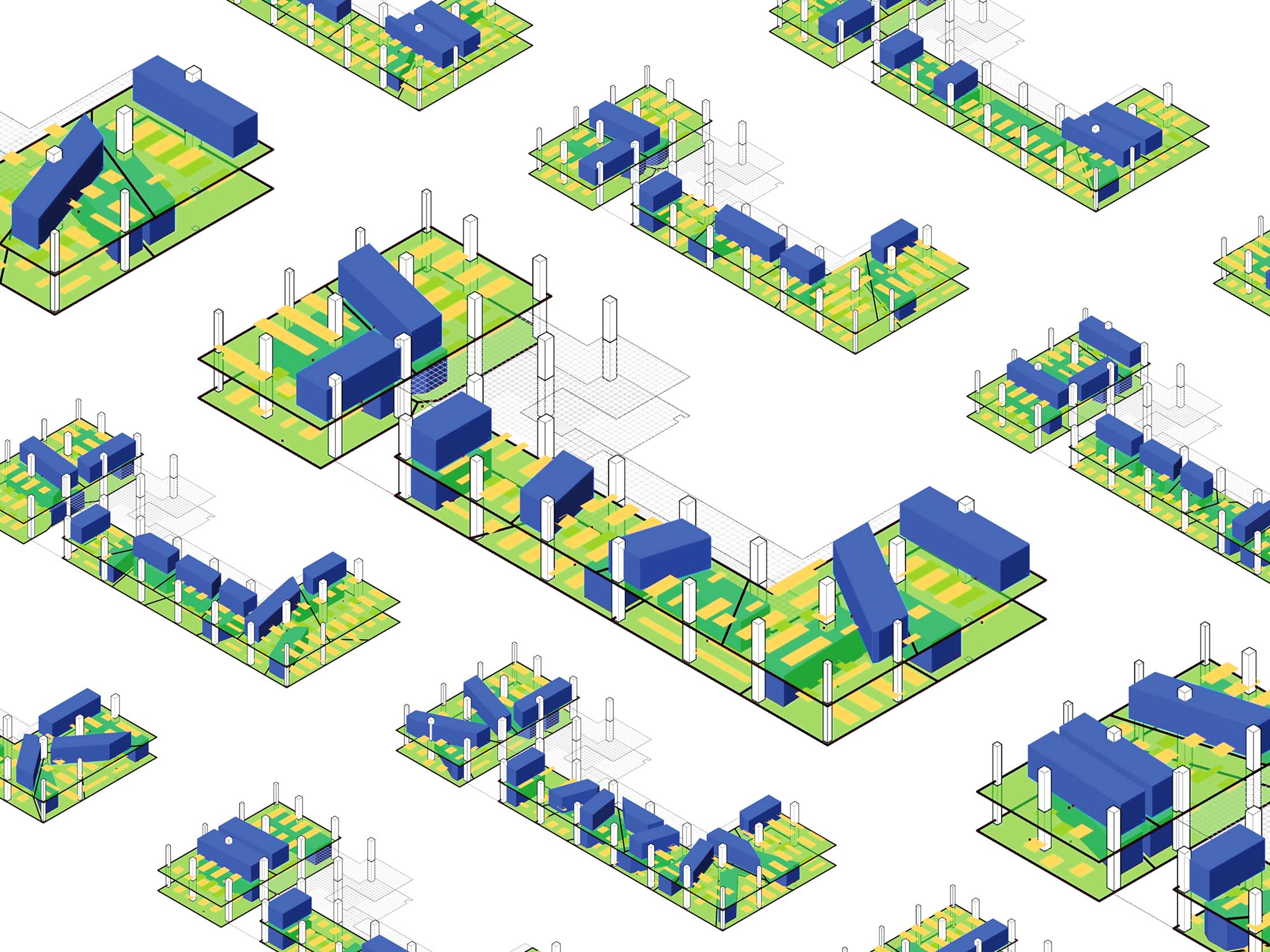
ARCHITEChTURES is dramatically improving the design process and is rapidly becoming the preferred tool in the initial phases of the building design process, the perfect copilot for architects and decision-makers. The system generates in real time a BIM model with the geometry resulting from the AI-aided design process, all with a data structure that is completely navigable online to facilitate user review and design edition. Created as part of Microsoft’s Artist in Residence program, the installation Ada, named after first computer programmer Ada Lovelace, uses AI to create a performative environment. The first architectural pavilion project to incorporate AI, the exoskeleton translates data from visitor’s facial expressions and their voice tones into specific sentiments.
How to Use Stable Diffusion to Create Awesome AI-Generated Art
For her Foyer of Enchantment, Scheff installed a custom mural by Hattas Art Studios, a John Richard chandelier dripping with glass leaves, a silk wall covering by Aux Abris, and organic furniture created with Amorph Studio. “I wanted you to feel like you were transported to another time and place,” Scheff says. The architect Danish Kurani, who runs his own design studio, has been using VR tools for seven years. Early on in the process of designing a room or building, Kurani puts on a headset to view proposals created by architects on his team and talk through different options. When they’ve finished their preliminary designs, he then gives his clients guided tours to get them excited and to solicit feedback.
Videla-Juniel and project manager Cheryl Hardy also installed a striking shower clad in herringbone stone tile. Designer Rachel Scheff used the home’s spectacular ceiling, woodwork, and stained glass as the inspirations for her fanciful, flora- and fauna-filled foyer. “It was one of my favorite rooms in the house because it was the one that had the most history preserved, and I wanted to really celebrate that,” she told AD PRO.
How are AI Systems Assisting Architects and Designers? - ArchDaily
How are AI Systems Assisting Architects and Designers?.
Posted: Tue, 23 Apr 2024 10:30:00 GMT [source]
Does ArchiVinci preserve the design lines during rendering?
The march of digital automation is likely to cloud the picture for new practices further. The striking products of AI are only one example of how technology may restructure, democratize, and upend architectural practice and labor. Beyond manual jobs most susceptible to automation, scholars have warned that the so-called knowledge professions, including architecture, must adapt or reinvent themselves. In the initial stages of a residential project is where the most relevant decisions about its feasibility and added value are made. At that time, multiple factors come into play, from quantitative aspects like regulatory compliance, program or cost to other qualitative aspects that impact the architectural design quality.
From a rendering perspective, tools such as ArkoAI may reduce the time spent on the design and rendering process in the Architecture, Engineering, and Construction (AEC) industry. The seamless integration between these types of artificial intelligence systems and AEC industry software prompts a transformation of the conventional design process. In the future, with a few words, building designs will be rendered with different environments, lighting, and styles. In this context, Generative AI generates new design ideas or rapidly renders directly from models developed in software such as Revit, SketchUp, and Rhino.
LAF Fellowship Spotlight: Artificial Intelligence (AI) in Landscape Architecture
With its advanced algorithms and machine learning capabilities, it can create intricate and detailed architectural designs within seconds. Architects can input specific parameters, and the building designer will generate multiple design alternatives, providing a wealth of inspiration and possibilities. The designers worked with a color palette of Dunn-Edwards paints, and several chose to highlight the brand’s 2024 Color of the Year, a steely blue called Skipping Stones. Nods to Pasadena’s famous peacocks can be found throughout the designs, and many creators fearlessly brought in statement floors, enveloped their spaces with jewel tones, and added texture to ceilings.
In training as an architect, one could not hope to see more than a few tens of thousands at an absolute limit. Data science techniques open the possibility of comparative analysis for vastly larger sets of visual data, effectively augmenting the intuition and capacity of an architect. This blurs the boundaries between the humanistic and computational techniques of analysis and criticism, and further calls into question the sacrosanct distinction between design and technique. Data has become a common lingua franca among disparate disciplines and industries, and as such constitutes an indispensable mode of analysis, insight, and action around complex multidimensional problems. As vexing ecological, social, and economic issues call for systemic transformation, data can provide a common framework for understanding and action.
“We wanted to concentrate on polished nickels and polished chromes to get that silver feel back in,” he says of the fixtures, hardware, and lighting by Kohler and Kallista. Hermogeno and designer Lynette Chin brought in a mix of vintage and new furnishings in the family room, incorporating performance fabrics for durability. “[We made] sure that it was a really usable room, that it didn’t just look nice,” Hermogeno says. “I really feel like the dining room is a forgotten room,” says the designer, who set out to prove how vital the space is to a home. The room is anchored by a Riva 1920 table made with the wood of a 50,000-year-old Kauri tree, which Levine surrounded with seating for 12. Another seating area with views of the garden was designed for more intimate dining, games, or meetings, and it’s illuminated by a Murano glass chandelier.
Despite cultural biases, designers like Bhatia believe that technology can bridge the gap between the human and the natural by showing buildings with natural attributes – such as the form of a tree – that AI can capture with a high degree of detail. According to Cusick, Stability AI is already working hard at implementing 3D processes for their platforms, and voice-to-image and image-to-image capabilities are other potentials for the technology that may soon be widely used. The images created by these bots – including eerily real-looking imaginary buildings – have become an internet sensation and led to discussions about how they could impact the future of design and architecture. In ClickUp’s virtual realm, real-time collaboration can be used to refine designs collectively, while ClickUp’s reporting tools provide invaluable insights to identify improvement areas and fine-tune workflows.
ARCHITEChTURES not only assists in the production of higher quality building design, it is also a powerful productivity tool as it dramatically reduces early stage residential design times from months to hours. We can customize the input and output parameters to guarantee a specific design outcome or to show any specific ratio or data coming from the building design in real time. The system performs a detailed takeoff of every work unit in real time to let the user input the unit cost for every line. This enables our users to continuosly know the economic impact of each design decision he makes.
Kaedim is a standout performer in the realm of AI-powered 3D modeling that is backed by many in the gaming industry. It harnesses the transformative potential of machine learning, generative adversarial networks, and natural language processing to morph simple 2D design ideas into stunningly accurate 3D models. Adobe Firefly, still fluttering in the chrysalis of development, is already showcasing the strength of its potential.
ArchiVinci offers a user-friendly experience, and you can try turning your sketch into a render for free. Take advantage of a trial or a free version to explore the features and see how ArchiVinci enhances your design process. A new tool is designed to help local governments organize and understand large volume of community input on projects.
The designer outfitted a door handcrafted in India with a vintage mirror to create a one of a kind headboard and bathed the space in deep emerald green. The glamorous touches continue in the ensuite bath, where Sabatella added a custom mirror-tiled tub that plays off the vintage French tile floor. AI in architecture is also limited by fundamental economic and selection-bias dynamics that affect the quality of data these applications draw on. AI algorithms are limited by how much data they have to learn from—in architecture, this data can be proprietary, which creates a disincentive to share it with potential rivals working on their own AI applications. Used mostly for office spaces, the AI for this application was trained with a subset of Obayashi’s portfolio of more than 2,800 Autodesk Revit files.


No comments:
Post a Comment